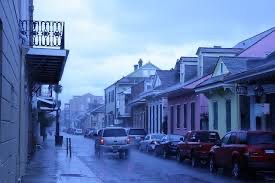
It’s a dreary, rainy day in New Orleans. The atmosphere is quiet, pensive, people are sitting outside, huddled under the dripping tent at Café Degas drinking their mimosas and bloody marys. The red roses on each table appear extra red. Little droplets coat the petals. The paté is nice. I bet the cheese would be tasty, too. The bread is soft, and the butter herbed. It’s French at Café Degas.
We’re walking and riding in the misty rain on this European day.
This all happened within four blocks.
Down Esplanade, onto Miro Street, there are puddles in potholes, and a giant gushing waterfall from the sidewalk into the intersection. The water flows from beneath a truck, whose wheels are popped off its body. Two other broken cars are scattered in the street, but there are no people. Just one man who tells us not to go this way, it’s dangerous. It is eerily quiet. The danger seems to have passed for the moment.
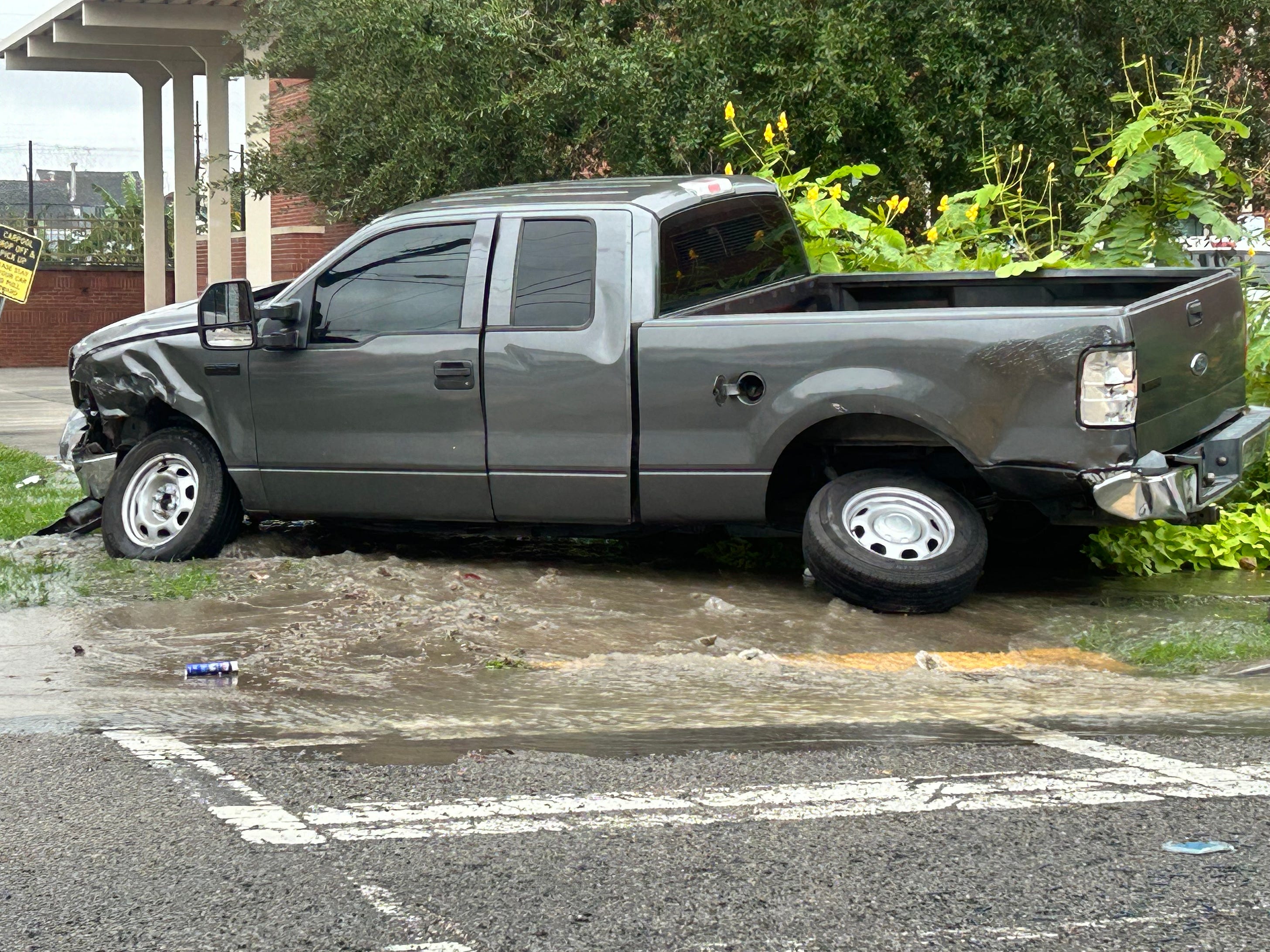
There’s trash everywhere. From the cars, or something else? It’s a mess. No police present, perhaps not yet. They’re busy. They have other things to do. Like attending to the swarm of people we can hear coming near.
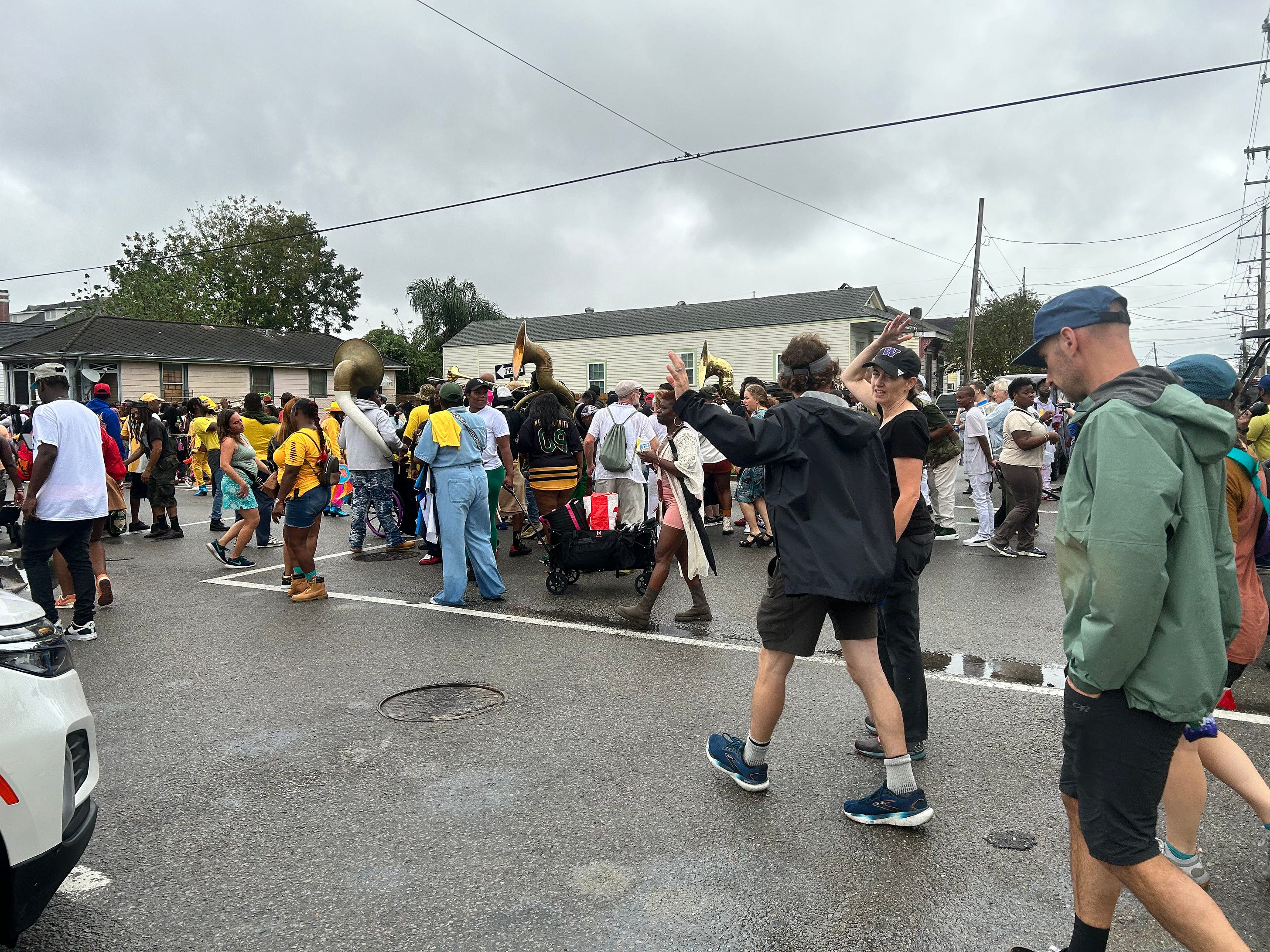
Turning left, near Galvez Street, there’s an echoing sound that pairs nicely with the trickling rain and car accident’s gush. Brass bands play as people from all walks of life, not matching in dress, dance down the street. A parade. How lovely. How festive. How Tremé. What for? That I do not know. A white woman with her belly out does a shuffle step, gyrating her booty with her arms in the air, captivated by the parade. This is a New Orleans day. A man waves his arms high, his gold teeth gleaming from across the street, but his smile is delightful, one everyone can see, can feel, can embrace on this very New Orleans day.
Down the street from the parade is the Lafitte Greenway. It’s quiet, empty, no cyclists or pedestrians out on this dreary day. The swingset is empty too, and I want a turn on the swings as I walk nearby. There’s an indigenous mound next to the street. It’s made of red clay. It’s not really indigenous, but rather a symbol for those people who came before European settlers. Perhaps it’s appropriate to acknowledge them on this European day. We climb up the stairs of the mound, and turn to see the New Orleans skyline hanging between gray clouds. It’s pretty, but simple.
Do indigenous people really come to this mound to honor their ancestors? Or are the indigenous New Orleanians the Europeans who walk in the rain, shuffle to the parades, crash their cars without police presence in the pothole filled streets? These are things of New Orleans. These are the indigenous ways deep in the Tremé.
I kick at the base of the mound, and it crumbles beneath the ball of my foot. So delicate, like the rose petals whose droplets glisten at Café Degas. How long will this mound be around? How long will New Orleans be around – will it one day crumble or simply get washed away? Will what’s indigenous to the city be foreign decades from now? The people who the mound honors would likely not recognize this colony – would not recognize the woman who gyrates down the street. These new ways, new traditions, can soon, too, float away. Nothing is forever, everything is fleeting. What seems a matter of permanence, is merely today. This very New Orleans day.
 First Draft
Leave a comment